Terrible Lizards monsters
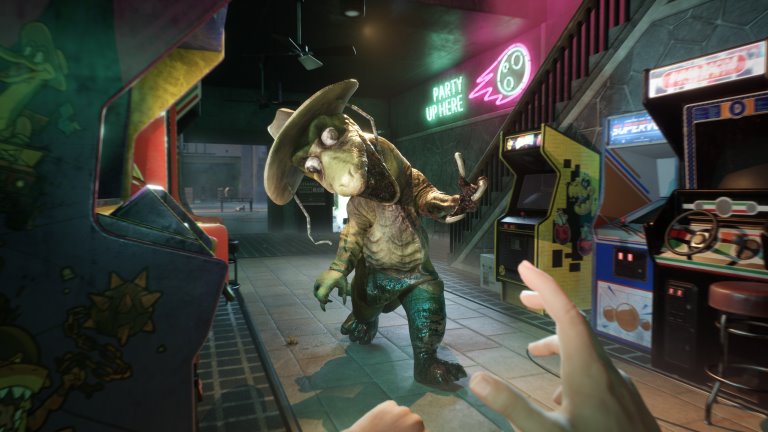
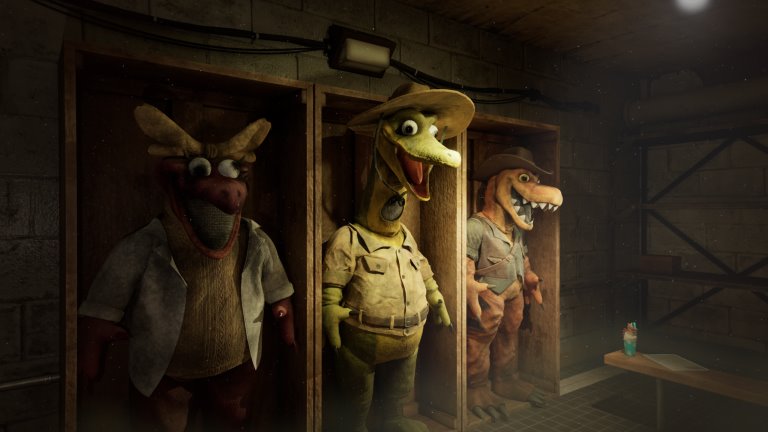
Terrible Lizards monsters include 3 main designs: Brontosaurus, Allosaurus and a Dilophosaurus–human Hybrid. Match the silhouette, then open your chapter route.
Free guide and browser tool · $0 · No account required
 Enlarge image
Independent public-source research. Official images are credited to their publisher; no first-hand gameplay test is claimed.
Which chapter are you in?
Filter the three Terrible Lizards monsters by the route you need. Names and public design details are visible; the ending is linked separately.
 Enlarge image
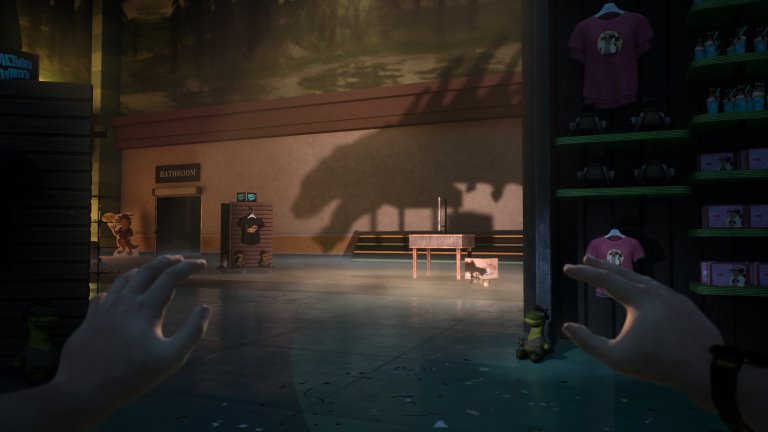
Brontosaurus / Bronto
Look for: Very long neck and a huge body
Read the route as a movement problem. In the first chapter, the obstruction at the glass doors sends you back toward the opened basement and the digsite. The second chapter introduces larger underground spaces and mechanisms around the Bronto encounter. A visible doorway is not automatically the escape route.
Open Chapter 1 museum route →Open Chapter 2 route →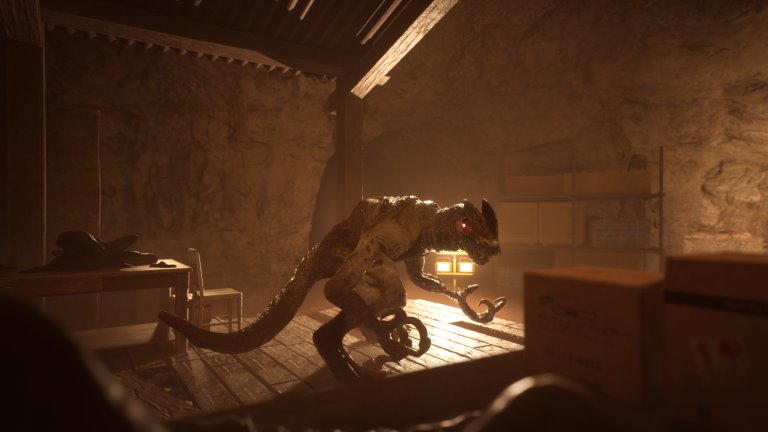 Enlarge image
Allosaurus / Allo
Look for: Large two-legged predator with a broad head
Use the work area and your active objective to find the correct route. Chapter 3’s guide follows the rail-tunnel and fuse objectives. If a video labels an encounter a boss fight, that is the creator’s description of the sequence, not evidence of a conventional combat system.
Open Chapter 3 route →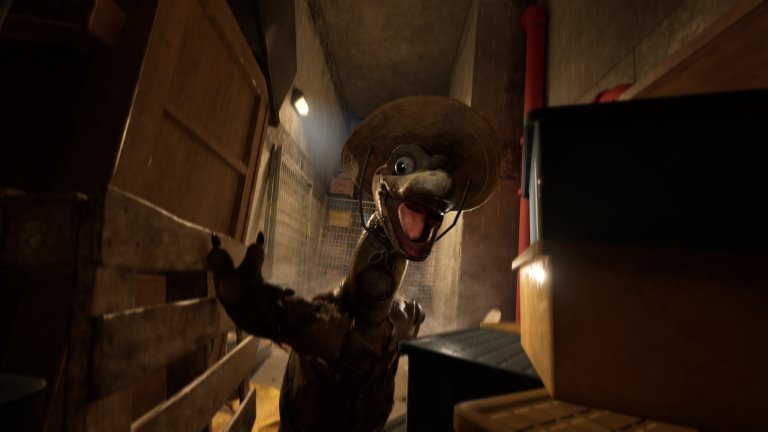 Enlarge image
The Hybrid
Look for: Human-like proportions mixed with a dinosaur head
The developer says this design changed from a human–raptor idea to a Dilophosaurus–human Hybrid. Early concepts and the final design can therefore look different. A mascot suit is a disguise or presentation cue, not proof that every Paleo Pal is a separate hostile creature.
Open Chapter 4 route →Terrible Lizards monsters or Paleo Pals?
The attraction sells friendly dinosaur characters while the game presents hostile creatures. That contrast is deliberate. The June creature-design devlog explains that the costumes were designed to be wearable 1990s mascot suits, while the monsters needed to feel at home in caves. Treat a mascot name, a costume and a creature species as different pieces of information.
| Label | What it describes | What it does not establish |
|---|---|---|
| Brontosaurus, Allosaurus, Hybrid | The developer’s main creature-design trio | A separate boss for every sighting |
| Benji, Alistair, Stephanie, Dennis | Paleo Pal names in the October Q&A | Four confirmed hostile species |
| Pterry | An additional mascot design mentioned in the June devlog | A guaranteed extra combat encounter |
| Boss fight in a video title | A creator’s grouping of a chase or set piece | Weapons, health bars or a verified enemy count |
 Enlarge image
Do not identify a creature from a small video thumbnail alone. Lighting, costume pieces and the camera angle can hide its outline. Match the neck, body shape and scene first. If those still do not agree, use the chapter’s current objective instead of committing to a fan nickname.
For example, a long neck in the attraction points you toward the Bronto route, while a two-legged predator in the rail-tunnel sequence points you toward Chapter 3. That is a navigation shortcut drawn from the existing chapter guides, not a claim that the creature can only appear once or in one room.
Why do the creatures look unlike ordinary dinosaurs?
WDR Studios worked with principal creature designer RJ Palmer. The June devlog describes a balance between familiar dinosaur forms and unsettling details, with real-world textures informing distorted anatomy. The team also considered cave-dwelling movement because much of the adventure takes place underground.
The October Q&A explains the choice of Brontosaurus, Allosaurus and Dilophosaurus. The creators wanted recognizable Jurassic-era animals, while acknowledging that this is not a precise reconstruction of one New Mexico fossil locality. The Hybrid’s crest also helped its silhouette stand apart from the other two designs.
Some concept sheets use an earlier human–raptor direction or older mascot names. They are useful for understanding development, but they should not be presented as final-game identification charts. This guide uses the later Q&A for the main trio and labels the publisher’s screenshots as promotional views rather than our own gameplay captures.
The important practical point is that an exposed-looking skull, strange limb proportions or an unnatural movement style can be intentional horror design. Those features alone are not evidence that an asset failed to load. When an objective actually stops responding, switch from creature identification to the troubleshooting route.
What should I do when a chase keeps going wrong?
- Find the active objective. A dinosaur may be the pressure behind a puzzle rather than the puzzle’s solution. Open the chapter route before repeating the same door or jump.
- Separate route mistakes from performance problems. Losing a jump does not prove a bug. A repeatable freeze or missing interaction needs the platform, installed version and exact scene recorded.
- Look ahead before adding optional collection goals. Once you know the escape sequence, return to the collectible tool for a cleanup pass. Its checkmarks cannot advance the game.
An October 31 X post by agent_munky reports lag when a bridge collapses and says the player could not see what was happening. That is one attributed player report, not a measured fault affecting every copy. It belongs in performance investigation rather than a claim that a different monster or secret route appeared.
We have not measured enemy speed, hearing range, damage, difficulty rankings or every spawn location. No unsupported threat tier is assigned here. The value of this page is recognizing the public designs, avoiding name confusion and taking you to a researched route with the least unnecessary plot exposure.
Sources and scope
- WDR Studios — Developer Q&A, October 22, 2026 ↗
- WDR Studios — Creature Design, Dalton’s Devlogs #1 ↗
- Terrible Lizards — official Steam store ↗
- Game_track — dinosaur encounters and ending; spoilers ↗
- agent_munky — attributed chase performance report, October 31 ↗
Official statements, creator recordings and player reports have different roles in this guide. Public-source checks were made November 5, 2026. A search trend or view count helps identify interest; it does not prove a game mechanic or a typical playtime.
Read our editorial method, privacy policy and terms. Send corrections to support@terriblelizardsgame.net.